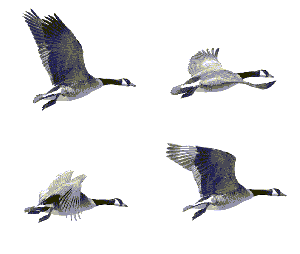
The significance of the symbol of the wild geese
The symbol of the wild geese is both a reflection of the school's motto "insurgite" - to fly high - and also represents the multi-disciplinary nature of the school. Geese in formation flight have come to represent team work and shared leadership in many organisations. While the symbol has been overused and has become a bit of a cliché, it is still a powerful reminder in the school of the importance of multi-disciplinary teams and team spirit.
The well known "Lessons from the geese", was written in 1972 by Dr Robert McNeish of Baltimore, Ohio, in the USA. He was a science teacher who had been intrigued with observing geese for years and wrote the piece for a sermon he delivered in church. More information can be seen on the web site of Sue Widemark.
Lessons from the geese
by Dr Robert McNeish
Fact 1: As each goose flaps its wings it creates an uplift for the birds that follow. By flying in a "V" formation, the whole flock adds 71% greater flying range than if each bird flew alone.
Fact 2: When a goose falls out of formation, it suddenly feels the drag and resistance of flying alone. It quickly moves back into formation to take advantage of the lifting power of the bird immediately in front of it.
Fact 3: When the lead goose tires, it rotates back into the formation and another goose flies to the point formation.
Fact 4: The geese flying in formation honk to encourage those up front to keep up their speed.
Fact 5: When a goose gets sick, wounded, or shot down, two geese drop out of formation and follow it down to help and protect it. They stay with it until it dies or is able to fly again. Then they launch out with another formation or catch up with the flock.
Lessons from the geese - science or feel good fiction?
While "lessons from the geese" is excellent for motivating a team, just how much of it is science? As can be seen from the following piece, enough of it has a basis in science for it to be used with confidence. This is by Iain MacLeod from the Audubon Society, explaining why geese fly in a V pattern when they're migrating:
"The simple answer is it's easier for them. Studies show that one of the main reasons why these birds do this is to save energy. Scientists attached heart monitors to pelicans, which also fly in a V formation, and found that their heart rates went down when they flew this way. They were also able to glide more often.
The aerodynamic V shape reduces the air resistance. As cyclists know, the first person in line breaks up the air, which then flows over the rest of the group more easily. The riders in back are drafting the leader - not getting a free ride, exactly, but getting an easier ride, to be sure.
It's the same thing with birds. The air to the side of a bird is smoother to fly in than the more turbulent air right behind. If geese flew in a straight line, it would be like a person trying to swim behind a motor boat.
This saves energy. A lot of energy. Another study showed that geese could fly 70% farther when they fly in formation.
Of course, there is no energy savings for the lead bird, which is why the groups switch off leaders regularly.
As geese migrate thousands of miles each year, saving energy is very important. And I don't think it is coincidence that the birds that migrate like this are our big, heavy birds, such as geese, swans, cormorants, and pelicans. It appears that small birds just don't displace enough air to make doing this worthwhile.
It is also thought that the birds can see each other better when they fly in this way. And there might be a social aspect to this as well - geese do honk while they're flying together."
This page should be viewed in a frameset. Should you have accessed it directly through a search engine and it is unframed, you can view the framed website by clicking the "Home" link below.
Lesson 1: People who share a common direction and sense of community can get where they are going quicker and easier because they are traveling on the thrust of one another.
Lesson 2: If we have as much sense as a goose we stay in formation with those headed where we want to go. We are willing to accept their help and give our help to others.
Lesson 3: It pays to take turns doing the hard tasks and sharing leadership. As with geese, people are interdependent on each other's skills, capabilities, and unique arrangements of gifts, talents, or resources.
Lesson 4: We need to make sure our honking is encouraging. In groups where there is encouragement, the production is much greater. The power of encouragement to stand by one's heart or core values and encourage the heart and core values of others is the quality of honking we seek.
Lesson 5: If we have as much sense as geese, we will stand by each other in difficult times as well as when we are strong.